
Is there environmental sustainability in Singapore?
Background information:
The Singapore Green Plan 2030 is a comprehensive, nation-wide movement aimed at achieving net-zero emissions by 2050, with key targets including reducing landfill waste by 30%, increasing solar energy five-fold, and planting 1 million more trees. The strategy focuses on green infrastructure, sustainability in everyday life, and a circular economy* to build a resilient, green city.
*A circular economy is a restorative system designed to eliminate waste and pollution by keeping products and materials in use for as long as possible
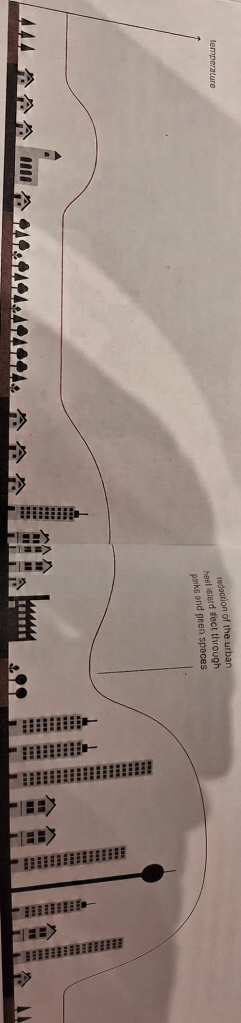
Source A: A diagram showing the heating of cities
Source B: A description of Park Royal on Pickering
| Park Royal Collection @Pickering is globally renowned for its pioneering “hotel-in-a-garden” concept. A nod at its Biophilic Architecture: Designed by world-renowned firm WOHA, the building features striking, undulating concrete layers inspired by Balinese rice terraces.Vertical Greenery: It boasts over 15,000 square metres of lush sky gardens, waterfalls, and planter walls—more than twice the hotel’s total land area. Let’s talk about Sustainability Leadership: It was the first hotel in Singapore to use solar-powered auto-irrigation and has won numerous “Green Hotel” awards globally, holding the highest BCA Green Mark Platinum rating. Finally, the Iconic Wellness Floor: The fifth floor is a dedicated wellness space featuring a 300-metre garden walk, a terrace infinity pool, and colourful bird-cage-shaped cabanas that offer views of the city skyline and Hong Lim Park. |
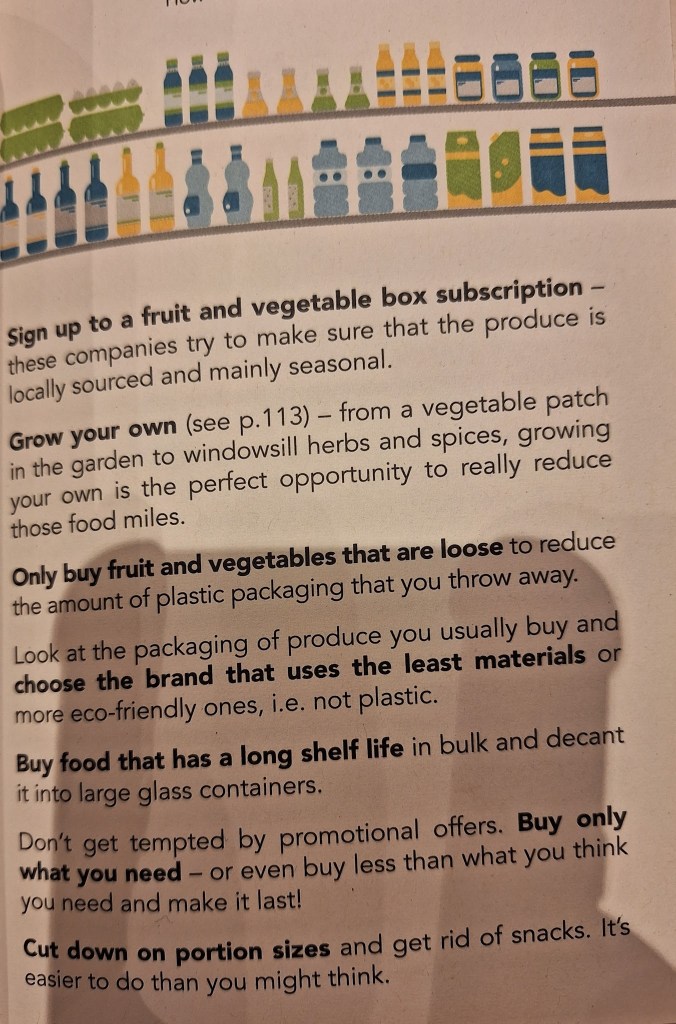
Source C: A written source on how to reduce your carbon footprint
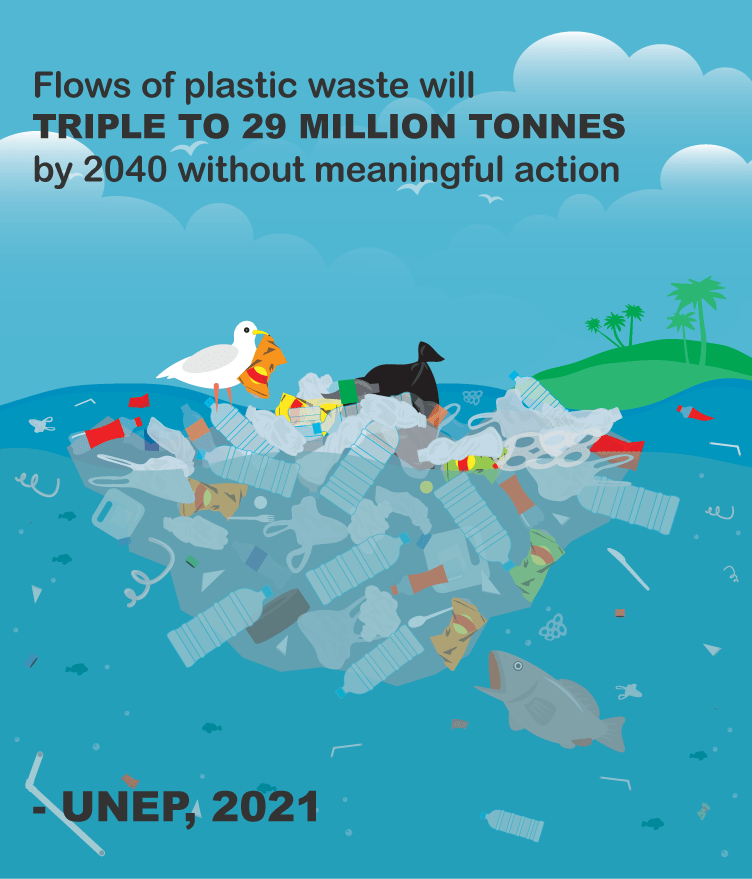
Source D: WWF infographic on plastic waste in Singapore
Source E: El Nino conditions in Singapore from a Straits Times news article
| El Nino events are considered strong by Meteorological Service Singapore (MSS) when the three-month average of the Nino3.4 index exceeds 1.5 deg C.The El Nino events spanning 2015 and 2016, as well as 1997 and 1998, both logged an index of more than 2 deg C. Prof Switzer said that generally, drier and hotter conditions brought by El Nino to much of South-east Asia can lower reservoir levels, stress water supplies, reduce crop yields, and increase the risk of drought, forest fires and transboundary haze, especially in Indonesia. “In the wider region, El Nino can also disrupt fisheries, ecosystems and hydropower generation while raising heat stress for people and cities,” he added. |
Questions:
a) Study Sources A and B. What are the similarities in both the sources?
b) Study Source C. Is source C surprising?
c) Study Source E. How reliable is Source E in discussing the effects of El Nino?
Subscribe to get access
Receive the updated answer key when you subscribe today.
Subscribe to get access
Read more of this content when you subscribe today.
b) Yes, Source C is surprising because it states that we should buy only loose fruit, without its plastic packaging. According to my contextual knowledge, most people buy fruit that has been packaged in some kind of plastic.
It is supported by cross referencing to Source D which states that “flows of plastic waste will triple to 29 million tonnes by 2040 without meaningful action”. That is surprising to me as I thought that many meaningful actions had already been done such as making plastic bags chargeable at supermarkets and shops.
c) The source is reliable in sharing the bad effects of bad weather conditions such as rainy and drought conditions. I know this because the source says ““In the wider region, El Nino can also disrupt fisheries, ecosystems and hydropower generation while raising heat stress for people and cities,” he added.” According to my contextual knowledge. this means that since we have all felt the temperatures rising in cities, it is a reliable source.
Source E is reliable if we cross refer to Source A. Source A also describes the heat stress faced in cities where there is a cluster of buildings, the temperature goes up. Similarly, Source E states that “El Nino can also disrupt fisheries, ecosystems and hydropower generation while raising heat stress for people and cities” during inclement weather, what more normal periods of time.
Also, if we study the provenance of the source, the source is reliable as it is a source written by a journalist from the Straits Times, our national newspaper, and thus it is definitely based on facts and not biased opinion. It can be trusted and therefore is a reliable source.
 RVCooks
Leave a comment